

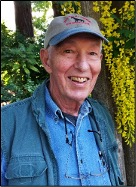
Richard R. Fagen passed away on August 12, 2026, at the age of 93, after a long struggle with Parkinson’s disease. He was not just a distinguished Latin Americanist but a cherished mentor and an activist scholar who pushed back incisively against the excesses of U.S. policy in Latin America and the Caribbean.
In 1974, he was elected President of the Latin American Studies Association (LASA). He played a key role in strengthening LASA’s relationship with the Ford Foundation, especially during his time as a Santiago de Chile-based consultant to the Foundation in the 1970s. This relationship has proven to be fundamental to LASA’s long-term financial health. In 1995, he received LASA’s Kalman Silvert Award for lifetime scholarly and service contributions, becoming the youngest person to be so honored. (For his very interesting and substantive award acceptance remarks, see: Richard Fagen, “Latin America and the Cold War: Oh for the Good Old Days?” LASA Forum, 26:3, October 1995, https://forum.lasaweb.org/issues/vol26-issue3/)
By his own account, Richard was an “accidental professor.” He never aimed to become an academic. When he moved to California in 1957 after college and military service, he thought he might help his Uncle Bob build tract houses in San Jose. Quickly discovering that he wasn’t particularly suited for that line of work, he drifted to the Stanford University campus, where he chatted up senior professors in a range of disciplines from English literature to social psychology, seeking a good potential fit for graduate study. Several departments were receptive to him; he finally chose Political Science as the best fit. His interlocutors had convinced him that he had the talent and temperament to succeed as an academic. But he was not yet committed to a Latin American studies career. Indeed, he wrote his Ph.D. thesis on the end of British colonial rule in Burma and Ghana.
Except for visiting professorships in Chile and Mexico, Richard’s academic career was based entirely at Stanford, where he completed his Ph.D. in political science in just three years, as well as an M.A. in Communication and Journalism. He became a full professor in 1970. In his last decade at Stanford, he was the inaugural holder of the Gildred Professorship in Latin American Studies.
After 32 years of teaching at Stanford, Richard took early retirement at the age of 60 to pursue what he called his “second career” as a tour leader and journalist, unencumbered by academic obligations. Although born and raised in the Chicago area, Richard became a devoted man of the sea, spending much of his life in close proximity to the oceans of the world. At the age of 14, he and a friend built a boat and tried to sail it from Chicago to New Orleans during spring break. After six days, they still had 1,000 miles to reach New Orleans, so they turned around and went home. But sailing had left its mark on him.
Richard was a Korean War-era U.S. Army draftee stationed in Puerto Rico, where he served as a recreational dive instructor for the military. He also had his first encounter with “a culture and society as foreign as if I had been stationed in Germany or Japan,” as he later recalled it. His first attempts to learn Spanish happened in the small cantinas that dotted the roads cutting through the sugar cane fields in Puerto Rico.
Mustered out of military service, he “bummed around the Caribbean” (his words) for two years doing ship repair work and commercial diving. He became a skilled undersea photographer. His photos were published in periodicals like Skindiver, and he consulted on a two-hour underwater special for the Discovery Channel. He and his wife, Deborah Bundy, chose to retire on López, a small island in the San Juan chain off the coast of Washington state with a population of about 3,000, where Richard built and sailed five small boats. He was an accomplished woodworker, and the sea was literally at his doorstep.
In his post-retirement years, he served on multiple types of ships as the on-board expert on ports of call, from Baja California and Cuba to Papua New Guinea, the west coast of South America, Antarctica, Polynesia, Micronesia, and Melanesia. Most of the more than 40 travel/study programs that he led were organized for Stanford University alumni.
Richard was the author or editor of 16 books—many of them single-authored—and more than 40 articles. Most of his published work analyzed the origins, dynamics, and aftermath of major social upheavals in Latin America: the Mexican, Cuban, and Nicaraguan revolutions, and the Salvador Allende movement in Chile. His books included a novel, Closer to Houston, a political adventure set in Central America. His fieldwork-informed academic books, including Cubans in Exile: Disaffection and the Revolution (1968), The Transformation of Political Culture in Cuba (1969), and Politics and Privilege in a Mexican City (1972), became instant classics in their areas of specialization, influencing generations of scholarship on political communication, political culture, and comparative local politics.
Richard was exceptionally active as a mentor of next-generation social scientists. All of his published writings were notable for the elegance and lucidity of his prose—skills honed as an undergraduate at Yale, where he majored in English Literature (magna cum laude, 1954), and in his M.A. training in communication and journalism at Stanford. His graduate students labored mightily to match that standard in their thesis writing and beyond. Richard was known for giving his Ph.D. students wide latitude to pursue their research passions, however unconventional by discipline standards. By retirement, he had chaired 25 dissertation committees and served as second reader on 37 more.
Richard’s manner was gentle and soft-spoken, but that calm exterior masked some fierce convictions, especially about U.S. government abuses of power and violations of human rights in Latin America. He had a deep interest in the Cuban Revolution, the seeds of which were planted during his military service in Puerto Rico. He was at the forefront of the struggle to enable research visits to Cuba by U.S. academics after the U.S. broke diplomatic relations with Cuba in 1961. He met with Cuban leader Fidel Castro on several occasions. His first stand-alone publication was a monograph titled Cuba: The Political Content of Adult Education (1964), which analyzed the first mass mobilization effort by the revolutionaries after they took power.
Later, Richard spent two years in Chile as a consultant to the Ford Foundation and visiting professor at FLACSO in Santiago—a period that coincided with mounting U.S. pressure on the government of Salvador Allende and clandestine operations to topple it. After the coup that ended Allende’s government, Richard’s writing and scholarly activism focused mainly on U.S. foreign policy, U.S.-Latin American relations, and the political economy of development, especially in the context of Central America. A notable publication from this period was his single-author book, Forging Peace: The Challenge of Central America (1987). On four occasions, he presented testimony to various U.S. Congressional committees critiquing U.S. policy toward the Chilean and Nicaraguan governments. (As he might say, “to no avail.”)
Richard was intensely involved in efforts to protect academic freedom and help scholars targeted by the post-1973 military regime in Chile to escape the country. This vital humanitarian work was recognized in October 2016 by the democratically restored Chilean government, which awarded him the Order of Bernardo O’Higgins, Chile’s highest civilian honor awarded to non-Chilean citizens. Perhaps no other recognition better captures Richard’s spirit and values than this one.
Richard Rees Fagen is survived by his wife, Deborah Shreve Bundy, four children (Sharon, Ruth, Elisabeth, and Michael Fagen), and ten grandchildren.
Bon voyage, Richard!